Guide · 5 min read
How do you host Christmas trivia that everyone can play?
Play in teams of four to six, with one answer sheet per team. Run four rounds of ten questions, read each question twice, and reveal the answers after every round so the room stays together. Multiple-choice options let children and grandparents both score, and a tie-breaker in your pocket settles a close finish.
Updated October 18, 2026 · Selenby Puzzles
Christmas trivia works for almost any gathering: eight people around the dining table, thirty colleagues in a conference room, or eighty people in a church hall. What changes with size is not the questions but the logistics. Here is how to host it so the room stays together and every age gets a turn to shine.
A week before: choose your format
There are two good formats for a mixed crowd.
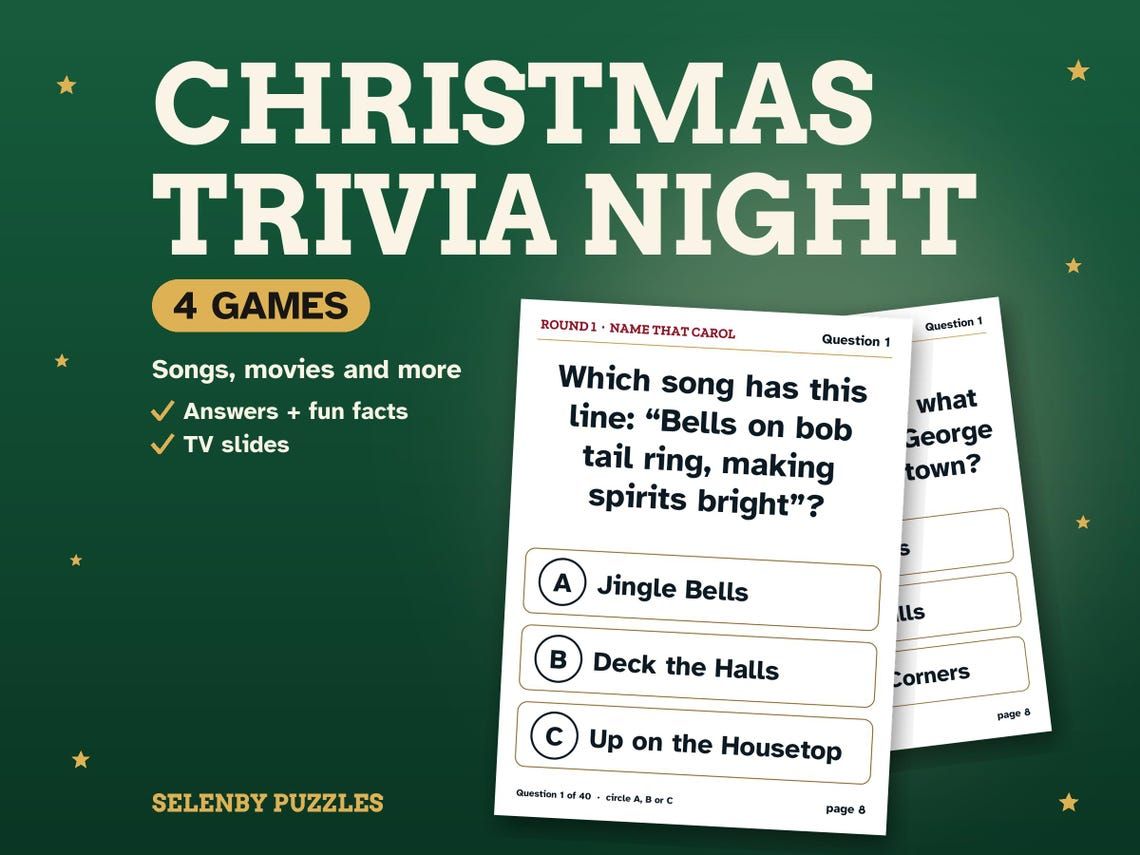
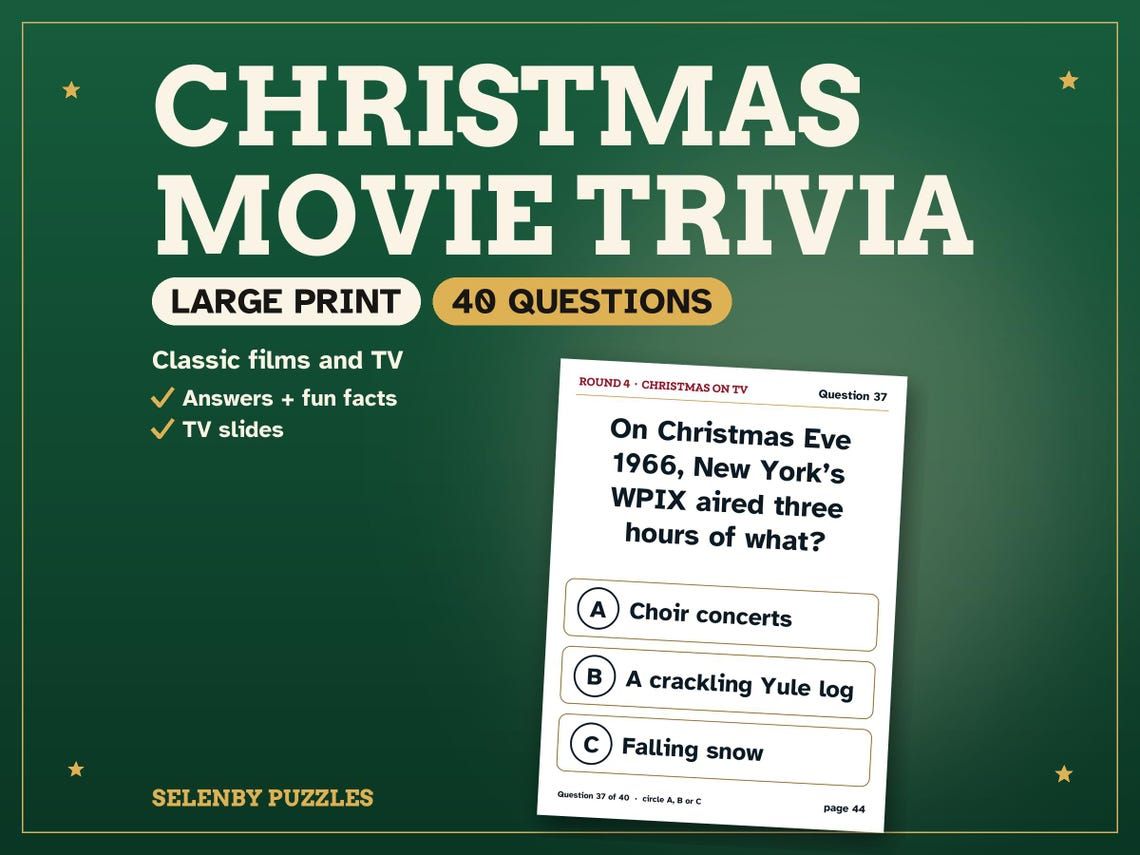
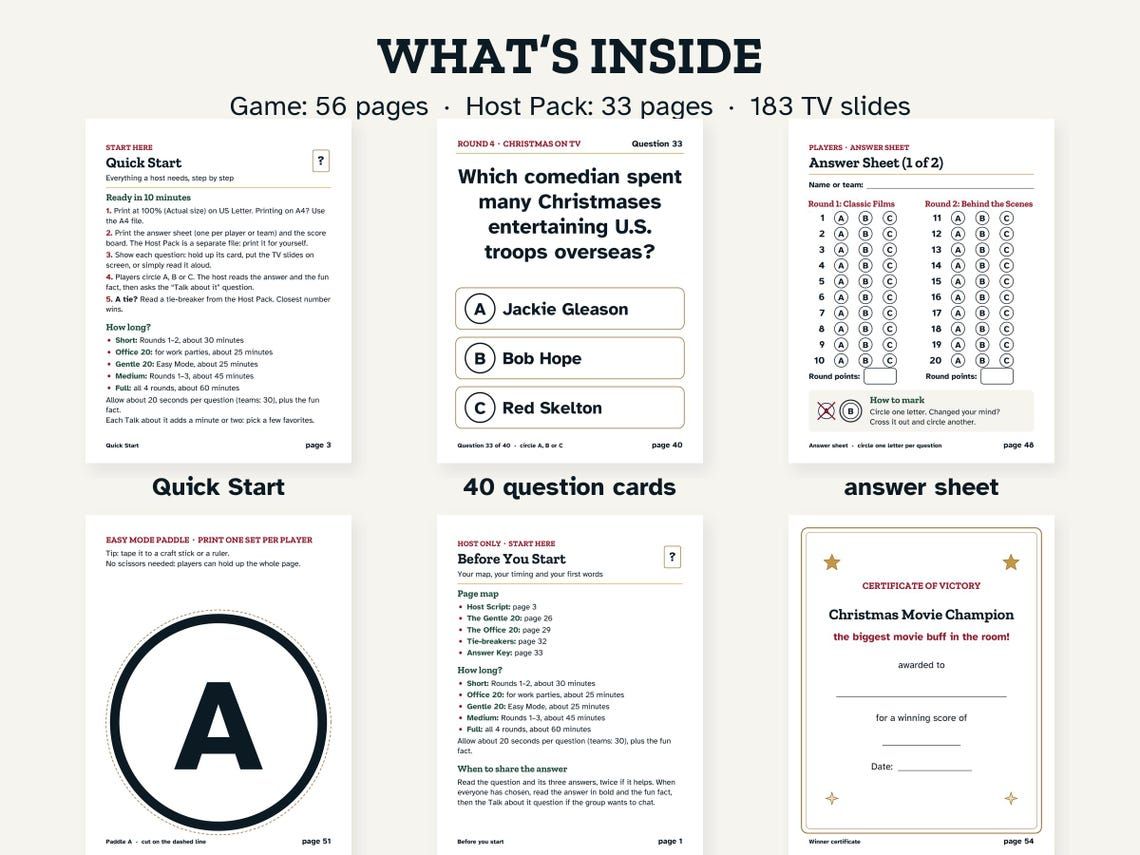
- Three-choice questions (A, B or C). Classic trivia with a safety net. Our Christmas Movie Trivia and Christmas Song Trivia each have 40 questions in four rounds, with A B C paddles, five tie-breakers and a 20-question short game.
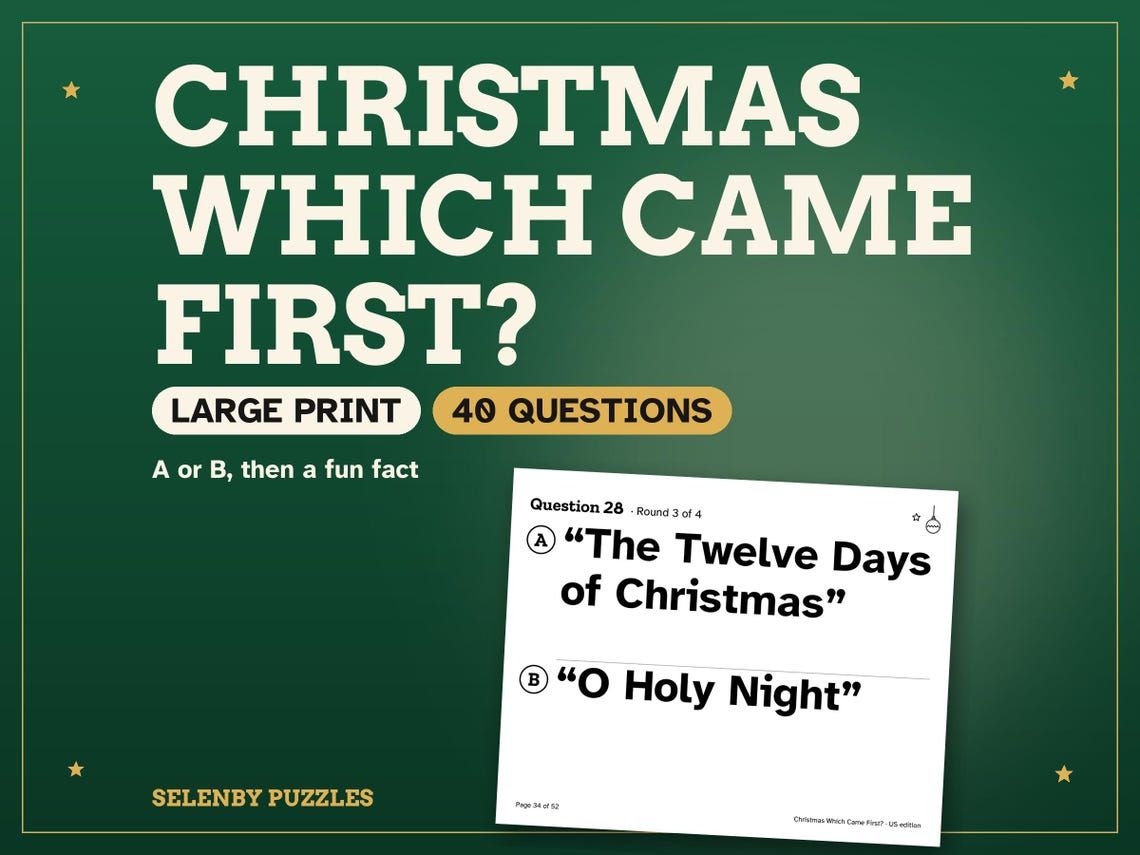
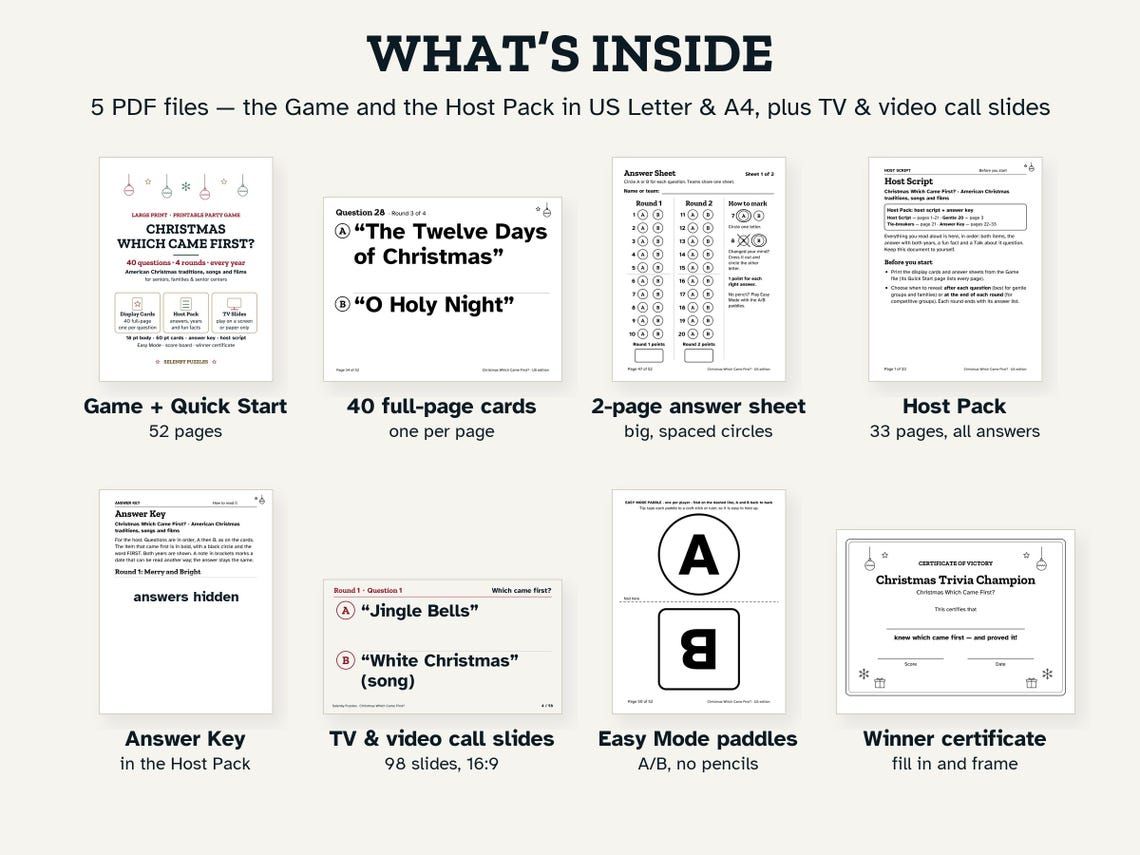
- Two-choice questions. “Which came first: the candy cane or the Christmas card?” Players reason it out instead of recalling a fact, which levels the field between ages. Our Christmas Trivia: Which Came First has 40 questions in four rounds, two choices each, with Easy Mode paddles.
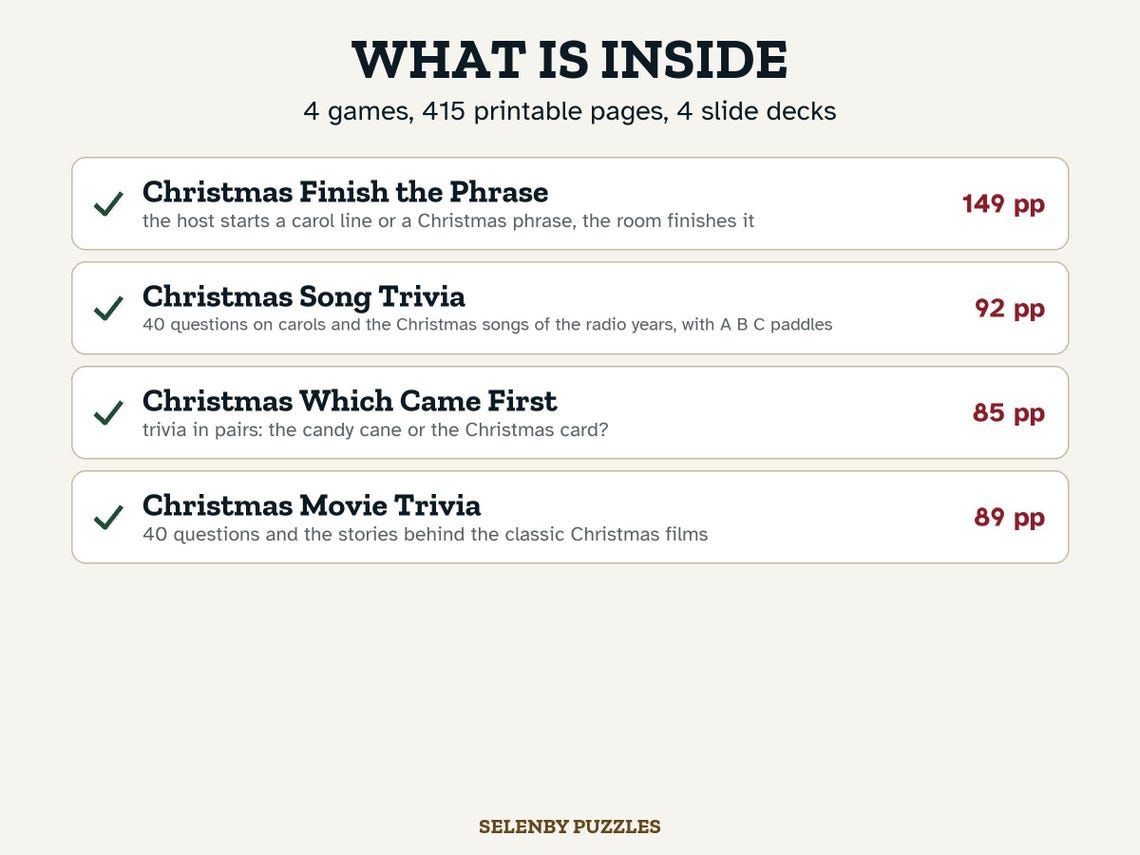
If you want a full evening, play two or three games back to back with a break between them. Our Christmas Trivia Night Bundle puts four of these games in one download.
Three days before: print and test
- Print one test page at Actual size (100%) on the file that matches your paper, US Letter or A4. Check that nothing is cut off at the edges. Our guide on printing at actual size walks through every app.
- Print the question cards if you’ll hold them up, or plan to use slides on a TV.
- Print one answer sheet per team per game, plus spares.
- Print the score board once, large, for the wall.
- Keep the host pages to yourself. The answers and fun facts live there.
Card stock makes question cards easier to hold up and lets you use them again next year.
Setting up teams
Four to six players per team is the sweet spot: enough knowledge to cover carols, films and history, small enough that everyone talks.
| Crowd | Teams | Tip |
|---|---|---|
| 6 to 10 | 2 teams | Kitchen against living room |
| 20 to 30 | 4 to 6 teams | One captain per team writes the answers |
| 60 to 80 | 12 to 16 table teams | A runner collects sheets; a helper keeps score |
Mix the ages at every table. Ask each team for a name; it costs a minute and warms the room more than any icebreaker.
Running a round
- Announce the round and its theme, so teams know whether to lean on the film fan or the choir member.
- Read the question number, the question and the options. Then read them all again. The second reading is for the back of the room and anyone hard of hearing.
- Give 30 to 45 seconds, then move on. A steady pace keeps energy up.
- After ten questions, collect the sheets (or have teams swap and mark each other’s).
- Read the answers aloud with one fun fact each. This is where trivia becomes conversation: the story behind a song often gets a bigger reaction than the answer.
- Update the score board where everyone can see it, then start the next round.
With paddles instead of paper, every player raises A, B or C at once. You see the room’s answer in a glance, and players who find writing tiring can still take part fully.
How long it takes
| Game | Questions | About |
|---|---|---|
| Christmas Trivia: Which Came First | 40 | 25 minutes |
| Christmas Song Trivia | 40 | 30 minutes |
| Christmas Movie Trivia | 40 | 30 minutes |
| Christmas Finish the Phrase | 60 lines | 20 minutes |
Add five minutes per round for scoring if you mark sheets yourself. For a party where trivia is one game among several, play a single round of ten and save the rest for another evening.
Scoring and the finish
Give one point per correct answer. Keep bonus points simple, or skip them; complicated scoring slows the room. If two teams tie, read a tie-breaker: the closest answer to a number or a year wins. End with something for everyone, not only the winners. A certificate for the team with the funniest name or the loudest cheer keeps the last place table smiling.
Keeping every age involved
- Seat the youngest next to the oldest. Children read the options out; grandparents supply the stories.
- Pick questions that span decades. A mix of classic carols, newer songs and family films means each generation has its round.
- Large print matters at a distance. Question cards you hold up should be readable from the back table.
- Don’t rush the slowest team. Wait until every captain looks up.
Trivia is one of the easiest games to host and one of the hardest to get wrong, as long as you keep the teams mixed and the pace steady. For the rest of the evening, see our Christmas trivia and party games.